HOLOLIFE Longevity Côte d'Azur
Beyond 120: The Missing Science of Human Coherence
By Teemu Arina · · Updated

At Hololife Longevity Côte d'Azur, Tateki Matsuda Argued That Living Longer Would Mean Little Without Learning How To Live Whole
The longevity movement has spent years promising control. More data, more biomarkers, more supplements, more precision. But in Nice, France, at Hololife Longevity Côte d'Azur on 12 March 2026, Tateki Matsuda offered a strikingly different proposition. The future of health, he said, would not be secured by fragmented self-optimization, but by coherence.
Speaking in the closing keynote, under the title “Beyond 120: The Missing Science of Human Coherence,” Matsuda, a former UFC fighter and longevity sports nutritionist from Tokyo, drew on a life lived across disciplines: baseball, mixed martial arts, academic nutrition, performance science, fatherhood, and biohacking. His message was simple, but not simplistic. Human beings, he suggested, were not failing because they lacked enough tools. They were failing because they had lost integration.
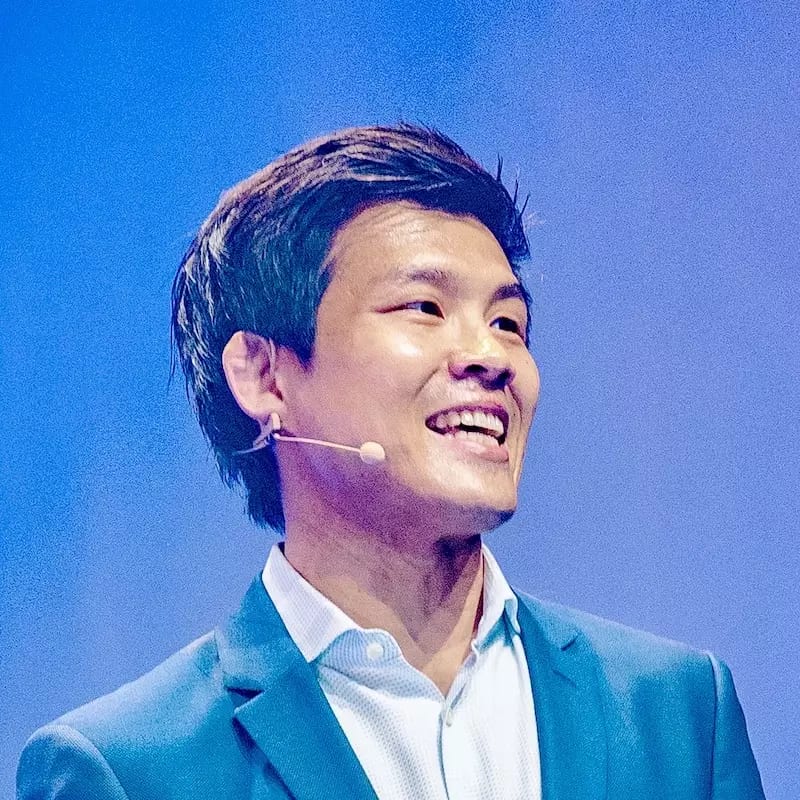
“Resilience is the ability to respond, adapt and recover. Wash, rinse and repeat,” he said.
The Limits Of The Biohacking Dream
Matsuda did not dismiss wearables, tracking, or the modern appetite for measurement. He used them himself. But he challenged the idea that a longer life could be engineered through metrics alone.
The central illusion of contemporary longevity culture, he implied, was that the self could be perfected in isolation. Numbers might track sleep stages, heart rate variability, biological age, blood chemistry, or body composition, but they still could not capture the full architecture of a life: social conditions, purpose, emotional steadiness, community, meaning.
Longevity, in his framing, was not simply the extension of time. It was the creation of a system capable of carrying more life.
That distinction mattered. A person could optimise sleep while neglecting family. They could refine diet while living in psychic disarray. They could pursue health as an individual achievement while remaining deeply fragmented. The problem, Matsuda said, was not just ageing. It was disconnection between systems that were supposed to move together.
The Age Of Fragmentation
Modern life, as Matsuda described it, had become a machine for biological and psychological splintering. Metabolism, attention, sleep, nervous regulation, identity, and purpose had all been broken into separate problems, each managed with its own intervention, each sold as a private fix.
This fragmentation was not abstract. It lived in skipped meals, jet lag, overstimulation, addictive social media use, erratic routines, and the subtle violence of lives lived out of rhythm. Matsuda spoke from experience, recounting the practical absurdities of constant travel, performance pressure, parenting, and public work. Even biohacking, he suggested, could become another expression of disorder if it existed only to patch over a life that had lost internal alignment.
The body, in this account, was not merely tired. It was unsynchronised.
Resilience, Not Damage, Defined Health
One of the sharpest turns in Matsuda’s talk came in his rejection of a common cultural myth: that ageing was simply the accumulation of damage. That view, he argued, missed what mattered most.
“Youth is not the absence of damage; it is the capacity to recover,” he said.
Health, then, was not a flawless state. It was adaptive capacity. The real measure of a person or a system was whether it could return to baseline after stress. Frailty was vulnerability without recovery. Resilience was the ability to be challenged and come back.
This idea gave the talk much of its force. Matsuda was not selling invincibility. He was describing a dynamic state in which stress, adversity, and even injury were part of life, but not its end point. A healthy organism was one that reorganised itself after disruption.
That principle extended from physical training to immunity, from emotional regulation to ageing itself.
The Metabolism Myth And The Lifestyle Problem
Matsuda pointed to research suggesting that basal metabolic rate remained relatively stable until around age 60, unsettling the familiar complaint that midlife decline was simply a matter of biology switching off.
If people felt older sooner, he suggested, the explanation often lay elsewhere: poorer sleep, reduced movement, lower muscle stimulus, more alcohol, greater stress, irregular eating, and a rhythm of life that had become chaotic. In other words, what many interpreted as inevitable physiological decline might actually have been the downstream effect of fragmentation.
This was not an argument against ageing. It was an argument against surrendering too early to a false story about it.
Sleep Was More Than Rest. It Was Synchronisation
Among the most compelling parts of the keynote was Matsuda’s insistence that sleep should not be reduced to duration. Sleep, he said, was a system-wide act of synchronisation.
Drawing on findings from the UK Biobank, he argued that irregular sleep timing could carry greater cardiovascular risk than simply sleeping fewer hours. The point was not merely to get enough rest, but to live in a stable circadian rhythm. Consistency in sleep and waking mattered because the body was not a passive battery. It was a timed orchestra.
Hormones, reaction time, temperature, blood pressure, and metabolic processes all followed a daily pattern. To disrupt that pattern chronically, through shift work, constant travel, or erratic schedules, was to place strain on the body even when total sleep time seemed adequate.
In Matsuda’s account, sleep was not just recovery. It was order.
Immunity Could Not Be Reduced To “Boosting”
The same logic applied to the immune system. Matsuda warned against the simplistic language of “boosting” immunity, a concept beloved by the wellness industry. More activation was not always better. What mattered was appropriate response and effective recovery.
“Health is not only about power; it is about the ability to organize that power correctly,” he said.
He framed immune ageing through three concepts: immunosenescence, inflammaging, and immune resilience. The last of these was the most important. A resilient immune system was not one that was permanently on high alert, but one that could meet a challenge and then return to balance.
This was coherence in immunological form: not permanent defence, but intelligent regulation.
The Body Digests Meaning, Too
One of the keynote’s more memorable detours came through food. Referring to research involving gluten, placebo conditions, and IBS symptoms, Matsuda highlighted the nocebo effect: people could experience genuine distress from foods they believed were harmful, even when the trigger was not physiologically active.
From this, he drew a broader conclusion. The body does not digest nutrients alone. It digests expectation, culture, fear, memory, and meaning.
That was why his critique of rigid biohacking diets landed with particular force. To demonise food entirely, he suggested, was to risk severing eating from place, tradition, pleasure, and community. In France, he said, he wanted a baguette. In Japan, rice and ramen belonged to life. Such remarks were not a nutritional free-for-all, but an argument against reducing health to a joyless compliance regime.
Coherence, here too, meant integration.
Lessons From The Cage
Matsuda’s years in MMA gave the presentation its grounding. In the cage, he said, there was no room for performative wellness. Under pressure, physiology told the truth. Breathing, emotional control, attention, and presence could not be faked for long.
If a fighter panicked, overthought, or lost connection to the moment, the cost was immediate. Long-term stress, he noted, was closely associated with accelerated biological ageing. The lesson from combat was not aggression, but regulation: the ability to stay present, to control response under duress, and to recover quickly enough to continue.
This was resilience stripped of metaphor. Not the abstract language of lifestyle branding, but a bodily discipline learned in moments when losing focus could mean being knocked out.
Purpose As Biological Architecture
The deepest note in the talk came when Matsuda turned to purpose. Not as motivational rhetoric, but as a regulatory principle.
“Purpose stabilizes your behavior, behavior stabilizes your rhythm, and rhythm stabilizes your biology,” he said.
He drew on the Japanese concept of kokorozashi, describing it as something deeper than fleeting motivation or even the fashionable language of ikigai. It was not a productivity tool. It was an unwavering, soul-level orientation, an organising force that gave structure to action over time.
Without such purpose, Matsuda suggested, longevity became directionless. A longer life without meaning was not a triumph. It was an extension of confusion. But with purpose, behaviour became more stable. Rhythm followed. And from rhythm came the physiological steadiness on which resilience depended.
In that sense, purpose was not separate from biology. It shaped it.
From Self-Optimization To Collective Meaning
Matsuda ended with a challenge to the culture that had helped create the very audience before him. The first generation of biohackers, he said, asked how to optimise the self. The next generation would need to ask a harder question.
“The first generation of biohackers asked how to optimize themselves, but the next generation must ask: what is my health for?”
It was the line that seemed to gather the rest. The body was not merely a private project. Health was not only an individual possession. True optimisation, in Matsuda’s telling, had to mature into service. It had to become something that strengthened families, communities, and the social fabric around a person.
That was the moral seriousness at the heart of the talk. Living beyond 120, the fantasy promised in longevity circles, would mean little if all it produced was a better maintained individual, suspended inside a damaged world. The real task was larger: to build human beings capable of carrying more life, and to do so in ways that made life around them more stable, not less.
At Hololife Longevity Côte d'Azur, Tateki Matsuda did not offer a miracle protocol. He offered something rarer: a framework in which biology, behaviour, rhythm, purpose, and community belonged to the same system. In an age addicted to optimisation, it was a call to become whole.
Frequently asked questions
What did Tateki Matsuda mean by human coherence?
That health comes from integration rather than from collecting more tools: sleep, immunity, metabolism, relationships and purpose working as one system. In his telling people are not failing for lack of biomarkers or supplements but because they have lost that integration.
Who is Tateki Matsuda?
Founder of HOLOLIFE Center Japan, a former UFC fighter and mixed martial artist with degrees in sports movement science and applied nutrition, who now works as a longevity sports nutritionist and health consultant between Tokyo and Boston.
What did he say about sleep and immunity?
He framed sleep as synchronisation rather than rest, and argued that immunity cannot be reduced to boosting; both are properties of a coherent system, not outputs of a single intervention.
About the event
This recap is part of the HOLOLIFE Longevity Côte d'Azur series, recorded in Nice on 12 March 2026. Read the summary of the whole day or join the next edition, HOLOLIFE Summit 2026 Amsterdam, on 14 and 15 November 2026.
In this story
Comments
Loading comments…